Tuesday, February 7, 2012

February 7, 9

Click on the image to enlargen

Next is the DESIGN (Criterion B) stage of the Design Cycle.

Students are expected to generate several feasible designs that meet the design specification and to evaluate these against the design specification.

Students are then expected to select one design, justify their choice and evaluate this in detail against the design specification.

To get a 5/6: The student generates a range of feasible designs, each evaluated against the design specification. The student justifies the chosen design and evaluates it fully and critically against the design specification.

FYI (For your information) - Here is an example of a design of a grammar review quiz/game that I made. Click on the above picture to enlarge it and look carefully at the image. Can you understand how this quiz/game will function?

Design Due Friday,  February 10

Learning Objective: generate several feasible designs that meet the design specification; evaluate the designs against the specification; select one design andjustify its choice.

Thursday, February 2, 2012

February 3

http://blog.39degreesnorth.tv/wp-content/uploads/2010/04/1.jpg
Year 10, please finish the Design Brief today.

IB Learner Profile - Inquirer

Learning objectives-The student will: independently identify meaningful questions, carrry out web search, select and organize appropriate sources and evaluate them.

February 2

We got turned around today because of the lack of internet connection but we did make progress.

Let's recap:

3.  Formulate a Design Specification

My game for social change should have the following characteristics:

  • error free (justify)
  • user friendly (justify)
  • fun (justify)
  • clear instructions (justify)
  • educational (justify)
To test my game I will create a questionnaire. On a scale of 1-5 (1=awful, 5=awesome), I will ask the following questions:

Learning objective: The student will list the specific requirements taht must be met by the product/solution and dsign tests to evaluate the product/solution against the design specification.

Tuesday, January 31, 2012

February 2


Happy Groundhog Day!

Year 10 - Please finish the Design Brief today.  Tomorrow we will complete the third task in the Investigation:  3. Formulate A Design Specification.  We will write design specifications, justify them, and create a test to evaluate our product.

Friday is our Investigation deadline. Please stay on task to finish on time.

Please leave a comment on this post to acknowledge that you understand your assignment. Thanks so much for that;-)

Learning objectives-The student will: independently identify meaningful questions, carrry out web search, select and organize appropriate sources and evaluate them.

Tuesday, January 24, 2012

January 24, 26

http://www.leafgrafica.com/images/home_winningdesign_normal.jpg
You will create a game/activity that is interactive and designed to teach someone about a social issue that you believe in and think is important for others to know about.

2.  Develop a Design Brief

Write a sentence or two to introduce this portion of your Investigation. Then craft research questions/topics  that will help you solve your problem. 

1.  Research "video game genres" .  Define, explain, compare/contrast different genres.
2.  Research "social issues".  Choose one, explain why you have chosen this.
3.  Research 3 different "games for change" to gather information and ideas that you can use when you make your own game.  Summarize the game; then analyze the game.  What did you like? What didn't you like?  What did you learn from playing this game? What ideas will you use when you make your own game? Include printscreens and url's.
4.  Now research your topic and collect information to include in your game/activity.
5.  Research 3 different programmes/tools that you can use to make your own game.  Explain findings; include details. Include printscreens and url's.  Justify your choice of programme/tool.


_________________________________________________________________________________

Term 2 Due Dates

  • Investigate - Feb 3
  • Design - Feb 10
  • Plan - Feb 17
  • Create - March 2
  • Evaluate - March 9 
________________________________________________________________________________

IB Learner Profile: Inquirer

Please leave a comment on this post to acknowledge that you understand your assignment. Thanks so much for that;-)

Learning objectives-The student will: independently identify meaningful questions, carrry out web search, select and organize appropriate sources and evaluate them.

Thursday, January 19, 2012

AOI: Health and Social Education

Our AOI focus will be Health and Social Education (concerned with the well-being of yourself and others)
How do I think and act?  How am I changing?  How can I look after myself and others?

According to the IBO:
This area of interactioin is about how humanity is affected by a range of social issues.  It is concerned with physical, social and emotional health and intelligence - key aspects of development leading to a complete and balanced lifestyle.

Health and social education goes beyond the sole provision of information and acquisition of knowledge, and encourages the development of critical-thinking skills and attitudes that play in important role when making decisions and confronting life options.  H&SE encourages respect for the self as well as respect for others.  This enables students to understand how personal decisions and actions can affect themselves as well as others.

Ourselves in the Wider Society - Behaviour and ethics
Analyse ethical and social issues and independently make personal and sustainable choices.

Ourselves and Others - Personal values and takeing responsibilities
Evaluate the consequences of your choices and investigate alternative pathways.  Exhibit and reflect upon the accountability for your decisions and actions.

Wednesday, January 18, 2012

January 19, 20

http://upload.wikimedia.org/wikipedia/commons/thumb/f/f9/New_Games_for_Change_logo.jpg/220px-New_Games_for_Change_logo.jpg
Year 10, let's move on.  Let's look at our new project.

As you know, each MYP Technology Class presents you with a problem to solve. The "problem" is the "guiding question";-) Our guiding question is: "How can I use computer technology to make people aware of social issues?"

The best way to begin your Investigation is by writing a paragraph that explains the problem as you understand it. Then write a paragraph to connect your project to an  Area of Interaction.

According to the Assessment Rubric. . .
To get a 1/2: The student states the problem.
To get a 3/4: The student describes the problem, mentioning its relevance.
To get a 5/6: The student explains the problem, discussing its relevance.

Look at these words: states, describes, explains. How are they different?
Look at these words: mentioningdiscussing. How are they different?

To help you decide which social issue check out sites like: Amnesty International, Greenpeace or do a keyword search on Google (social injustice issues)

Click here for the Identify the Problem Template.


Then it's on to the 2nd task in the Investigation - "Develop a Design Brief."

1. Write a sentence or two to introduce this portion of your Investigation.

2. Then follow these learning objectives to success,

-formulate and discuss appropriate questions (4 or 5) that guide the investigation -this means that you should create questions and then do research that will help you solve the problem
identify and acknowledge a range of appropriate sources of information - use in-text referencing and create a bibliography
-collect, analyse, select, organize and evaluate information - this deeper analysis of your research will lead to higher marks
-evaluate your sources of informationwho are your sources? are they appropriate? are they experts in the field?
Learning objectives - The student will: Differentiate action verbs, begin writing project intro (Identify the problem)independently identify meaningful questions, carrry out web search, select and organize appropriate sources and evaluate them.

Wednesday, January 11, 2012

January 12

http://blogs.davenportlibrary.com/teens/wp-content/timeisup.jpg
Let's finish up the Evaluate today so we can move on to the next project;-)

Learning objective: carry out tests to evaluate the product/solution against the design specification; evaluate their perforance at each stage of the design cycle and suggest ways in which their perforance could be improved; evaluate the impact of the product/solution on individuals and/or society.

Monday, January 9, 2012

January 10


Year 10, Let's finish the evaluation;-)

Please leave a comment on this post to acknowledge that you understand your assignment.  Thanks so much for that;-)

Learning objective: carry out tests to evaluate the product/solution against the design specification; evaluate their perforance at each stage of the design cycle and suggest ways in which their perforance could be improved; evaluate the impact of the product/solution on individuals and/or society.

Wednesday, January 4, 2012

January 5, 6


Welcome back Year 10.  I hope you had a good break and wish you loads of happiness in 2012.

We have 2 periods today.  Let's finish our projects so we can move onto something else.

Let's recap what is needed in the Evaluate (Criterion E).

1.  Show your business card to at least 5 people
2.  Ask them to complete the test that you created in the Investigate
3.  Analyse feedback.  Write a paragraph evaluating  the feedback you receive.  Then suggest ways that you could improve your product based on these findings.
4.  Evaluate your performance at each stage of the design cycle (Investigate, Design, Plan, Create) AND suggest ways that you could improve your performance.
5.  Write a paragraph in which you evaluate the impact of your product/solution on OIS (Did you meet your unit goal?  Relate this paragraph back to the Area of Interaction that you used in your "Identify the Problem" in the Investigation).


I will also need your Create (Criterion D).   


Please print your work for Create and Evaluate.


Please leave a comment on this post to acknowledge that you understand your assignment.  Thanks so much for that;-)


Learning objective: carry out tests to evaluate the product/solution against the design specification; evaluate their perforance at each stage of the design cycle and suggest ways in which their perforance could be improved; evaluate the impact of the product/solution on individuals and/or society.

Thursday, December 15, 2011

December 15


Year 10, it's period 7 on the day before we break for winter holidays.  I know you are tired.  Let's take a break from our normal routine and enjoy the season.  You're never too old to play . . .


http://www.bhg.com/holidays/create-a-cookie/

http://snowflakes.barkleyus.com/

http://akidsheart.com/holidays/christms/chgames.htm

Happy Holidays Year 10

Monday, December 12, 2011

December 13

http://creativenerds.co.uk/wp-content/uploads/2010/05/chrisspooner.jpg

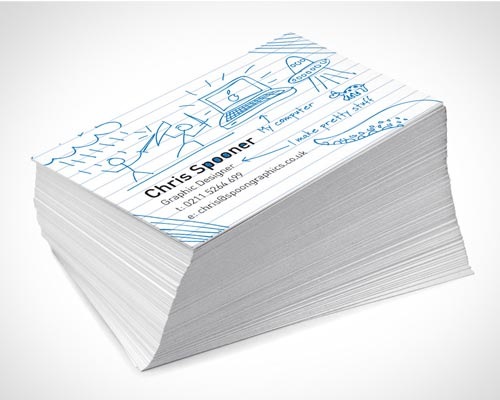
Year 10, Please finish your Create (Criterion D)  and submit today.  Remember this includes your business card and the paragraph(s) stating how well your plan worked.

Then let's move on to the final step of the MYP Design Cycle.

Next on the list is Evaluate - Criterion E (Maximum 6)

1.  Show your business card to at least 5 people
2.  Ask them to complete the test that you created in the Investigate
3.  Analyse feedback.  Write a paragraph evaluating  the feedback you receive.  Then suggest ways that you could improve your product based on these findings.
4.  Evaluate your performance at each stage of the design cycle (Investigate, Design, Plan, Create) AND suggest ways that you could improve your performance.
5.  Write a paragraph in which you evaluate the impact of your product/solution on OIS (Did you meet your unit goal?  Relate this paragraph back to the Area of Interaction that you used in your "Identify the Problem" in the Investigation).

Remember to leave a comment on this post stating that you understand your assignment. (Thanks a bunch!)


Learning objective: carry out tests to evaluate the product/solution against the design specification; evaluate their perforance at each stage of the design cyucle and suggest ways in which their perforance could be improved; evaluate the impact of the product/solution on individuals and/or society.

Thursday, December 8, 2011

December 9

Year 10, now on to the fun part - Create

1. Follow your plan to create your business card.
2. Write a well-developed paragraph saying whether your plan worked or not. (What went right? What went wrong? What steps did you leave out?  How would you perfect this plan next time? What changes did you make to the original design or plan? Why did you make them?)

Learning Objective:  The student will: use a range of appropriate techniques and equipment competently; ensure a safe working environment for themselves and others; follow the plan to produce the product/soltuion; evaluate the plan and justify any changes to the plan (when necessary); and create a product/solution of appropriate quality.

Monday, November 28, 2011

November 29

http://themarketingguy.files.wordpress.com/2008/05/business-card-stand-out-picture.jpg

Now, on to the Create, Criterion D (maximum 6 points)

The Create should take you 1 period to create.


According to the IBO: 
Students are expected to document, with a series of photographs or a video and a dated record, the process of making their product/solution, including when and how they use tools, materials and techniques.  Students are expected to follow their plan, to evaluate the plan and to justify any changes they make to the plan while they are creating the product/solution.  This means that you must have a process journal and that it is a necessary component of this criterion.

To get a 5/6:
The student competently uses appropriate techniques and equipment.
The student follows the plan and justifies any modifications made, resulting in a product/solution of appropriate quality using the resources available. This means that you must write a paragraph saying if your plan worked.

Learning Objective:  The student will: use a range of appropriate techniques and equipment competently; ensure a safe working environment for themselves and others; follow the plan to produce the product/soltuion; evaluate the plan and justify any changes to the plan (when necessary); and create a product/solution of appropriate quality.

Wednesday, November 23, 2011

November 24, 25

http://autonomousmind.files.wordpress.com/2010/11/happy-thanksgiving.jpg
Year 10, Happy Thanksgiving!

Today we spend 2 period together.  Let's see if we can finish up the Plan (Criterion C).

Remember:

The PLAN should include:
1. Resources

2. Step by Step plan (include time - include how many class periods this will take you.)

3. Remember to include a paragraph to evaluate your plan. Say why your plan will work. Ask someone to evaluate your plan and give you feedback. Include this information in your paragraph.

IB Learner Profile: Thinker

Learning objectives:
1. construct a plan to create the product/solution that has a series of logical steps,
2. construct a plan to create the product/solution that makes effective use of resources and time,
3. evaluate the plan and justify any modifications to the design.

Monday, November 14, 2011

November 15, 17

http://www.redcross.org/www-files/Images/Preparedness/MakeAPlan.gif

Year 10, it's time to make a plan.  Your plan must be completed by the end of class on Thursday, November 17.  If you finish early, please follow your plan to create your business card;-) The assessment rubric is here: http://www.box.net/shared/qx6thypvus

The PLAN should include:
1. Resources

2. Step by Step plan (include time - include how many class periods this will take you.)

3. Remember to include a paragraph to evaluate your plan. Say why your plan will work. Ask someone to evaluate your plan and give you feedback. Include this information in your paragraph.


Learning objectives:
1. construct a plan to create the product/solution that has a series of logical steps,
2. construct a plan to create the product/solution that makes effective use of resources and time,
3. evaluate the plan and justify any modifications to the design.

Thursday, November 10, 2011

Wednesday, November 9, 2011

November 10

http://heymonicab.com/wp-content/uploads/2009/01/make_a_plan2.jpg

Good Morning Year 10 and welcome back. I hope you had a great half-term break.

Now, it's on to PLAN - Criterion C (maximum 6)
According to MYP Technology, "Students are expected to construct a plan to create their chosen product/solution that has a serios of logicl steps, and that makes effective use of resources and time.

Students are expected to evaluate the plan and justify any modifications to the design."

To get a 5/6: The student produces a plan that contains a number of detailed, logical steps that describe the use of resources and time. The student critically evaluates the plan and justifies any modifications to the design.

Ideas: Make use of Gantt charts, consider appropriate resources, consider problem areas that make any necessary adjustments.

Please look at the examples for ideas;-)


The PLAN should include:
1.  Resources

2. Step by Step plan (include time)

3. Remember to include a paragraph to evaluate your plan.  Say why your plan will work.  Ask someone to evaluate your plan and give you feedback.  Include this information in your paragraph.


Learning objectives:
1. construct a plan to create the product/solution that has a series of logical steps,
2. construct a plan to create the product/solution that makes effective use of resources and time,
3. evaluate the plan and justify any modifications to the design.

Wednesday, October 19, 2011

October 20, 21, 25, 27

http://www.36point.com/articles/bestbizcard%5B2%5D.jpg
Next is the DESIGN (Criterion B) stage of the Design Cycle.
  • Students are expected to generate several feasible designs that meet the design specification and to evaluate these against the design specification.
  • Students are then expected to select one design, justify their choice and evaluate this in detail against the design specification.

To get a 5/6: The student generates a range of feasible designs, each evaluated against the design specification. The student justifies the chosen design and evaluates it fully and critically against the design specification.


IB Learner Profile Focus - Thinker


Learning Objective: generate several feasible designs that meet the design specification; evaluate the designs against the specification; select one design andjustify its choice.

Monday, October 10, 2011

Check this out!

<a href="http://video.msn.com?vid=17b91282-d42a-42db-b121-2ebec7135259&amp;mkt=en-US&amp;src=FLPl:embed::uuids" target="_new" title="Marching Band Performs &#39;Party Rock Anthem&#39;">Video: Marching Band Performs &#39;Party Rock Anthem&#39;</a>

Excellence  - something to strive for.

Ohio University rocks this half-time. . .

October 7, 11


3.  Formulate a Design Specification      (Create a Design Specification and Tests to Evaluate your product)

"A design specification is a series of statements that describe the possibilities and restrictions of the product."  They are important for determining the quality of the product.  Every item included in your design specification provides a test point.


Some language that might be helpful at this stage of the project is:
My design will need to . . .
The requirements of the people who will use it are . . . 
It will also need to do the following . . . 


We brainstormed possible design specifications for this project.  This is what we came up with.


Design Specification Ideas:
1.  Error Free
2.  Professional (attractive/eye-catching/appropriate)
3.  Relevant/complete
4.  Accurate (for the character)
5.  Materials
6.  Geared toward target audience.

Tests to evaluate your product -


Introduce this with a sentence such as:  


To evaluate my product I will create a questionnaire.  On a scale of 1 to 5 (1 = awful and 5 = awesome) I will ask the following questions.  Then create a questionnaire.  You will create at least 1 question for each design specification.

Learning Objective: produce a listing of detailed specifications, identify ways of testing a solution on a specific audience or the intended user.

Wednesday, October 5, 2011

October 6

Year 10, Hope you enjoyed our mid-week break!

Let's finish the Design Brief today.

Learning objectives: independently identify meaningful questions, carrry out web search, select and organize appropriate sources and evaluate them.

Tuesday, September 27, 2011

September 27, 29

Project Investigation:  You will need to find out as much as you can about the people and situation you are designing for.  To do this, you will need to identify a number of different sources of information to research into.

Starting Questions:  Make a list of questions you will have to find answers to.  You should find the following prompts useful:  Why. . .?  When . . .?  Where . . .?  What . . .?  How many. . .?  How often . . .?  How much . . .?  Keep your questions relevant so you don't waste time;-)

Sources of Information:  Carefully consider the sources of information that you use.  Use experts in the field.

don't forget . . .
     1.  Make sure your research is pertinent
     2.  Make sure your research is complete - it's your responsibility to be clear and concise
     3.  You need to use a range of sources of information
     4.  Make sure your research work is cearly and attractively presented

  possible language to use in your written work . . .
     From my research I found out . . .
     I have discovered that . . .
     My conclusions are that . . .
     I have kept my research relevant by . . .
    
     Learning objectives: independently identify meaningful questions, carrry out web search, select and organize appropriate sources and evaluate them.

Thursday, September 22, 2011

September 23


Year 10, good job.  Now let's move on to the 2nd task in the Investigate -

 2. Develop a Design Brief

Follow these learning objectives to success,

-formulate and discuss appropriate questions (4 or 5) that guide the investigation -this means that you should create questions and then do research that will help you solve the problem


identify and acknowledge a range of appropriate sources of information - use in-text referencing and create a bibliography


-collect, analyse, select, organize and evaluate information - this deeper analysis of your research will lead to higher marks


-evaluate your sources of informationwho are your sources? are they appropriate? are they experts in the field? 


Develop 4-5 pertinent questions to help drive your Investigation, then conduct research to answer each question. A good place to begin is by researching business cards and advertising.


Let's brainstorm other possible questions that would help you solve your unit problem.


Also, begin to think about Design Specifications;-)


Learning objectives: independently identify meaningful questions, carrry out web search, select and organize appropriate sources and evaluate them.

Wednesday, September 21, 2011

September 22


Year 10, 1. Identify the problem is the introduction to your project. According to the IBO to get full marks you must explain the problem and discuss its relevance. Therefore, the introduction must include: stating the problem, discussing the relevance of this project, the solution and who your client is. You must also connect your project to an area of interaction.

This should be finished today by the end of period 7.  I will collect the work on a pen drive.

Learning objective: The student will: Differentiate action verbs, begin writing project intro (Identify the problem).

Monday, September 12, 2011

September 13, 15

Task - Create a business card for a literary or historical figure.  Business cards are a relatively modern invention designed to introduce a person and provide at least a minimum amount of information about themselves or their business. This form of advertising is cheap and effective. 


Unit question:  How can I extend an introduction?


Remember there are 3 tasks in the Investigation. The first task is IDENTIFY THE PROBLEM.


The best way to begin your Investigation is by writing a paragraph that explains the problem as you understand it.
      A basic template to get you started: 
         Paragraph One
           - Lead-in sentence(s)
           - State the problem
           - Discuss Relevance (Say why we are doing this project)
           -State the solution
           -Include client/customer
         Paragraph Two
           -Connect your project to Human Ingenuity


Remember;-)
According to the Assessment Rubric. . .
To get a 1/2: The student states the problem.
To get a 3/4: The student describes the problem, mentioning its relevance.
To get a 5/6: The student explains the problem, discussing its relevance.


Look at these words: states, describes, explains. How are they different?
Look at these words: mentioningdiscussing. How are they different?
          
Learning objective: The student will: Differentiate action verbs, begin writing project intro (Identify the problem).

Wednesday, September 7, 2011

September 8


Good Morning Year 10.

We have an interesting day together.  We have 2 periods together.  Let's organize our work by periods.  If there are not enough computers, we will share;-)

Period 2:  (1)Google Docs Accounts.  Each student must have a Google Docs account by the end of class. http://docs.google.com

                (2)Summary Writing exercise.

Period 7:  (1)Explore Unit of Work,
                (2)Begin Investigation.

Wednesday, August 31, 2011

September 1

http://www.desigraphics.com/d/back_to_school/back_to_school_045.gif

Welcome back!  Hope you had a great summer!

Please be patient while we get the internet up and running.

Wishing each of you the best year ever!

Monday, June 27, 2011

June28, 30, July 1


Have a great summer Year 11! But before we go let's take a look at stop motion animation.

What is it? Stop motion (also known as stop action) is an animation technique to make a physically manipulated object appear to move on its own. The object is moved in small increments between individually photographed frames, creating the illusion of movement when the series of frames is played as a continuous sequence. http://en.wikipedia.org/wiki/Stop_motion 

Where can I find some examples to gather information, inspiration, and ideas?    Smash!ng Apps http://www.smashingapps.com/2009/06/15/21-stunning-examples-of-creatively-done-stop-motion-animations.html

Can I see another example?  Sure http://mildlymelancholy.blogspot.com/search/label/video

How can I do it?  Wiki How  http://www.wikihow.com/Create-a-Stop-Motion-Animation

When does it need to be finished?  Thursday end of class.

Let's see if we can get one or two of these in the end of year assembly!

Sunday, June 19, 2011

June 20

https://blogger.googleusercontent.com/img/b/R29vZ2xl/AVvXsEgH-jB1oY5O8gclWyU9WRwNZQkG3b0v_Qoh3EBNa6RYBs4UlWslYAf_PqDoRqKd1V5Xc1tHURG7S4c-OKXab_Qn5r_nfPk1k5k-h2nD4HdpQZvwhD3c3N7Ia0j8944WZYrQkWj9qhcDBaZg/s1600/phelps.jpg

This is it Year 10 - please submit all last minute work by the end of class today.

We have come to the end of the course. Thursday is a national holiday and many of you will be travelling on Friday to London for the Globe Theatre trip. Have a good time.

Sunday, June 5, 2011

June 6, (June 10 Holiday - no class)

http://creativenerds.co.uk/wp-content/uploads/2010/05/chrisspooner.jpg
Next on the list is Evaluate - Criterion E (Maximum 6)

1.  Show your business card to at least 5 people
2.  Ask them to complete the test that you created in the Investigate
3.  Analyse feedback.  Write a paragraph evaluating  the feedback you receive.  Then suggest ways that you could improve your product based on these findings.
4.  Evaluate your performance at each stage of the design cycle (Investigate, Design, Plan, Create) AND suggest ways that you could improve your performance.
5.  Write a paragraph in which you evaluate the impact of your product/solution on OIS (Did you meet your unit goal?  Relate this paragraph back to the Area of Interaction that you used in your "Identify the Problem" in the Investigation).

Learning objective: carry out tests to evaluate the product/solution against the design specification; evaluate their perforance at each stage of the design cyucle and suggest ways in which their perforance could be improved; evaluate the impact of the product/solution on individuals and/or society.

May 31, June 2, 3

http://themarketingguy.files.wordpress.com/2008/05/business-card-stand-out-picture.jpg


Finish you plans and move on to Create - Criterion D (maximum 6)

According to the IBO: 
Students are expected to document, with a series of photographs or a video and a dated record, the process of making their product/solution, including when and how they use tools, materials and techniques.  Students are expected to follow their plan, to evaluate the plan and to justify any changes they make to the plan while they are creating the product/solution.  This means that you must have a process journal and that it is a necessary component of this criterion.

To get a 5/6:
The student competently uses appropriate techniques and equipment.
The student follows the plan and justifies any modifications made, resulting in a product/solution of appropriate quality using the resources available.

Learning Objective:  The student will: use a range of appropriate techniques and equipment competently; ensure a safe working environment for themselves and others; follow the plan to produce the product/soltuion; evaluate the plan and justify any changes to the plan (when necessary); and create a product/solution of appropriate quality.

Sunday, May 22, 2011

May 23, 27

http://www.advantageinternational.com/files/uploadsb/Cartoon%20-%20This%20is%20our%20plan%20for%20the%20next%201000%20years.jpg
Year 10 you are doing great.

Now, on to the Plan -
he PLAN should include:
1. Resources

2. Step by Step plan (include time)

3. Remember to include a paragraph to evaluate your plan. Say why your plan will work. Ask someone to evaluate your plan and give you feedback. Include this information in your paragraph.


Learning objectives:
1. construct a plan to create the product/solution that has a series of logical steps,
2. construct a plan to create the product/solution that makes effective use of resources and time,
3. evaluate the plan and justify any modifications to the design.

Monday, May 9, 2011

May 9


Whether you like Coca Cola or not, you have to applaud their 125th anniversary.

Please continue with 2. Develop A Design Brief - Remember to follow along with the Business Card Unit of Work to help guide you through the Investigation. 11 Parts of a Business Card can be found here:-)

We would like to finish the questions today so we can move along quickly to the Design stage.

Learning objectives: independently identify meaningful questions, carry out web search, select and organize appropriate sources and evaluate them.

Friday, May 6, 2011

http://blog.clarknielsen.com/wp-content/uploads/2008/12/chalkboard.jpg
Year 10, I'm sorry but I won't be able to be with you today as I am under the weather. . .

Please continue with 2. Develop A Design Brief - Remember to follow along with the Business Card Unit of Work  to help guide you through the Investigation.  11 Parts of a Business Card can be found here:-)

We would like to finish the questions today so we can move along quickly to the Design stage.

Let me thank you for your co-operation.  You guys Rock!

English B - Nico and Lovisa, you will be joining Ms. Eaton for English B today.  If you need an assignment:  Please think of a movie you have recently watched and based on our lesson of yesterday write a Movie Review.  This is good practice for writing for the school's newspaper;-)

Learning objectives: independently identify meaningful questions, carry out web search, select and organize appropriate sources and evaluate them.

Tuesday, May 3, 2011

May 3, 5, 6

Year 10 welcome to Term 3. This term we will use our skills to learn about the importance of marketing.  We will design and create business cards . Our project my be finished on or before June 10.

Before we begin let's look at the Unit of Work.

Our unit question is:  How can I extend an introduction?

Remember there are 3 tasks in the Investigation. The first task is IDENTIFY THE PROBLEM.

The best way to begin your Investigation is by writing a paragraph that explains the problem as you understand it.
      A basic template to get you started: 
         Paragraph One
           - Lead-in sentence(s)
           - State the problem
           - Discuss Relevance (Say why we are doing this project)
           -State the solution
           -Include client/customer
         Paragraph Two
           -Connect your project to Health and Social Education

Remember;-)
According to the Assessment Rubric. . .
To get a 1/2: The student states the problem.
To get a 3/4: The student describes the problem, mentioning its relevance.
To get a 5/6: The student explains the problem, discussing its relevance.

Look at these words: states, describes, explains. How are they different?
Look at these words: mentioning, discussing. How are they different?
          
    
Learning objective: The student will: Differentiate action verbs, begin writing project intro (Identify the problem).